Every July, Disability Pride Month gives me an opportunity to reflect on how far we’ve come and how much work remains. This year feels a little different.
Professionally, I’ve spent this year leading accessibility projects, mentoring new accessibility professionals, and working directly with organizations that genuinely want to build better digital experiences. Every customer who asks thoughtful questions, every developer willing to learn, and every intern who grows into a more confident tester reminds me that accessibility is ultimately about people.
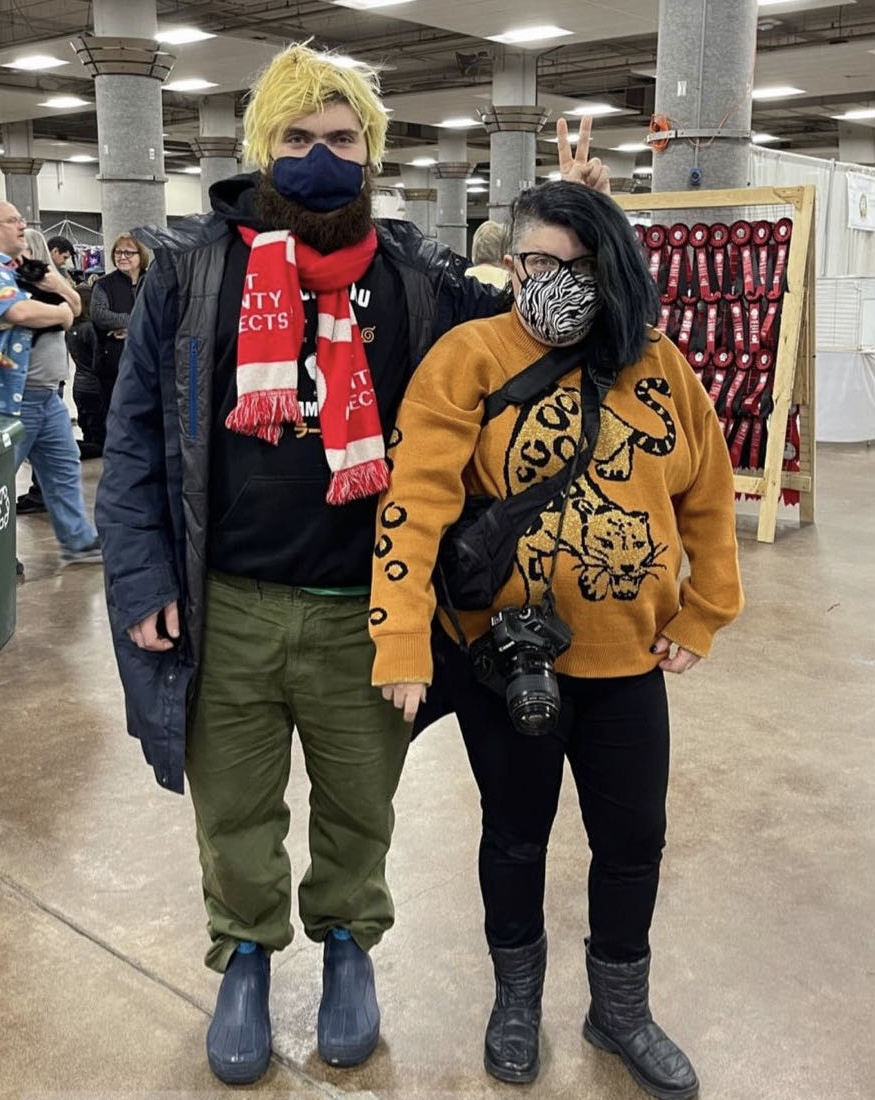
Personally, disability has never been just something I advocate for. It’s something I live every day. I’m AuDHD (autistic with ADHD) and live with chronic pain. I’m also the parent of a disabled adult son who continues to navigate a job market that wasn’t built with disability in mind.
Why Accessibility Matters
Those experiences shape how I approach accessibility. Standards like the ADA and WCAG matter because they create accountability. However, compliance has never been the finish line.
The real goal is making sure people with disabilities can fully participate in every aspect of life, including education, employment, healthcare, shopping, government services, and community.
As someone who spends every day helping organizations build more accessible products, I’m reminded that our work isn’t simply about removing barriers. It’s about creating opportunities for disabled people to learn, work, create, connect, and lead.
Progress Isn’t Guaranteed
Thirty-six years after the Americans with Disabilities Act became law, we’ve made meaningful progress. At the same time, recent developments remind us that progress requires continued attention and advocacy.
This year, the compliance deadlines for the ADA Title II digital accessibility rule were extended by one year. The Department of Health and Human Services also delayed the Section 504 web and mobile accessibility compliance deadlines for organizations it regulates.
While these decisions give organizations more time to prepare, they don’t change the reality that millions of people with disabilities need accessible digital experiences today. Accessibility shouldn’t be driven solely by a compliance calendar. It’s about ensuring equal access every day.
Disability-Led Innovation
Fortunately, there are countless examples of disabled people leading innovation and creating positive change.
One story that particularly inspired me was Small Talk ASL, an interactive American Sign Language learning app created by former Disney animator Josh Staub in collaboration with Deaf creators. Even more inspiring was their commitment to keep the app free forever because communication should never depend on someone’s ability to pay.
I was equally moved by chef Lay Alston’s story in The New York Times. After a spinal cord injury changed her life, she returned to her first love: bringing people together around a meal. Rather than seeing disability as the end of her career, she reimagined what hospitality could look like and continues building community around food.
These aren’t stories about “overcoming” disability. They’re stories about disabled people shaping the world through their expertise, creativity, lived experience, and leadership.
Looking Ahead
Disability Pride Month isn’t just about celebrating disability. It’s about recognizing the contributions disabled people make every day in our workplaces, schools, communities, and culture. Accessibility isn’t the end goal. Participation is.
When we build accessible products, services, and experiences, we create opportunities for disabled people to learn, work, create, connect, and lead. That’s how we move beyond compliance and build a world where disability is recognized as a source of expertise, innovation, and strength. I’m proud to do this work, and even prouder to be part of the disability community.
Happy Disability Pride Month, and happy 36th anniversary to the ADA. Let’s keep listening to disabled voices, learning from disabled creators, and building a world where everyone belongs.
Accessibility is often framed as usability or compliance. In some situations, it is about safety.
People communicate and respond differently under stress. What may look like noncompliance can be a disability-related response. When systems misread that, situations can escalate quickly.
What we’ll cover
This will be a discussion, not a lecture. We’ll talk about:
How disability is misinterpreted in high-stress environments
Why those misreads happen
What can change in design and communication
Practical ways to reduce harm
Join the conversation
Minnebar works because people show up and participate. If this topic resonates with you, register, select the session, and come be part of it.
Minnebar 20 Saturday, May 2, 2026 Best Buy HQ, Minneapolis
I have spent more than thirty years working in the digital space. For the last eleven years, I have focused specifically on accessibility. Before that, I worked across nearly every part of the software development lifecycle, from design and development to testing, remediation, and delivery.
Today, I help organizations reduce risk, strengthen governance, and build systems that account for disability and the full spectrum of human variability.
I think about WCAG. I think about keyboard access. I think about cognitive load, predictable navigation, and plain language. I focus on reducing user frustration. Most importantly, I think about how small design decisions either create dignity or cause barriers.
Over time, that mindset has shaped how I evaluate every system I encounter. When systems assume speed, precision, and uniform behavior, they exclude people. When systems account for variability, they reduce harm.
But accessibility does not stop at the screen.
Some systems carry consequences far greater than a broken checkout flow or an inaccessible PDF. Law enforcement is one of them. And too often, that system operates without accounting for how disabled people process, communicate, regulate, and respond under stress.
And for disabled people, that system often operates without accounting for how we process, communicate, regulate, and respond under stress.
When Misinterpretation Becomes Harm
In digital accessibility, we frequently identify mismatches between user needs and system expectations. When a system demands rapid processing speed, perfect recall, direct eye contact, or immediate compliance, disabled users are penalized.
Similarly, law enforcement interactions often rely on narrow assumptions about “normal” behavior. Officers may expect quick answers, steady tone, direct gaze, and immediate response. Yet many disabled people process language more slowly. Many of us avoid eye contact when overwhelmed. Some of us shut down under stress. Others require additional time before responding.
When authority misinterprets those behaviors as defiance or suspicion, situations escalate.
Unlike a website defect, the consequences are not inconvenience. They can include restraint, arrest, injury, or worse.
From a governance perspective, this represents unmanaged risk. From a human perspective, it represents preventable harm.
Why This Feels Personal
For me, this issue is not abstract.
As an AuDHDer, I understand what stress does to processing speed. I know how quickly my nervous system can overload. I have experienced how easily people misread my communication style in low stakes environments. I know what it feels like to search for words while someone expects an immediate response. I know how shutdown can look like refusal to someone who does not understand what is happening internally.
I am also the parent of an autistic adult. That perspective sharpens everything.
When I think about law enforcement interactions, I do not only think about governance frameworks or compliance obligations. I think about my child and his friends navigating a world that often interprets difference as defiance. I think about how sensory overload, delayed processing, flat affect, or literal interpretation could be misread in a moment that demands instant compliance. I think about how quickly a misunderstanding could escalate simply because someone in authority does not recognize disability.
Aliya Rahman’s story brought those fears into sharp focus.
Aliya is a Bangladeshi American software engineer and disability rights advocate who is autistic and has a traumatic brain injury. After federal agents forcibly removed her from her vehicle during an immigration enforcement operation in Minneapolis, she testified publicly about the experience. She described repeatedly informing agents that she was disabled and needed medical care. According to her account, those disclosures did not change how she was treated. She later lost consciousness while in custody and was released without charges.
She later testified before Congress about what happened. In her public testimony, which is available on YouTube, she spoke clearly and directly about the encounter. She described the physical force used against her, the dismissal of her disability, and the lasting impact of the incident. She did not present herself as a statistic. She spoke as a disabled person whose rights and safety were compromised in real time.
Watching her testimony and then seeing that arrest forced me to confront how quickly disability can intersect with power, politics, and enforcement. Standing silently. Processing differently. Responding slowly. These are not crimes. Yet in high stakes environments, they can trigger consequences when systems prioritize control over accommodation.
Her story transformed the issue from policy into proximity. It reminded me that when systems ignore disability, they do not merely inconvenience people. They expose them to physical danger. They dismiss explicit disclosures. They escalate instead of de-escalate.
As both a disabled person and the parent of a disabled adult, I cannot treat that reality as theoretical. It informs how I prepare. It shapes how I advocate. It reinforces why accessibility must extend beyond software and into every system that shapes authority, accountability, and safety.
The Weight of Helplessness
At the same time, watching federal agents use force against marginalized people can leave many of us feeling helpless.
We see large scale enforcement actions unfold. We see power exercised unevenly. We understand how small individual voices can feel in comparison to institutional machinery.
I feel that weight too.
Nevertheless, my work in accessibility has taught me that risk mitigation does not require perfection. Instead, it requires layered safeguards, documentation, and intentional design.
Preparation is not surrender. Preparation is strategy.
Before: Reduce Ambiguity
In digital accessibility, we design proactively. We do not wait for users to encounter barriers before we act.
Applying that same mindset, preparation for law enforcement interactions can include:
Learning your legal rights and practicing how to assert them clearly
Carrying a disability information card that explains communication needs
Identifying emergency contacts and legal resources in advance
Role playing scenarios to reduce cognitive load under stress
Admittedly, these steps do not eliminate systemic inequity. But they reduce ambiguity in moments where ambiguity escalates risk. They provide language ready for use. They give supporters a plan instead of panic.
In high stress moments, clarity reduces risk. Clear language under stress protects you. Predefined contacts reduce decision fatigue. A prepared script lowers cognitive load. This is defensive design for real life.
During: Make Accommodation Explicit
When stress rises, executive functioning drops. This physiological response affects everyone, and it can affect neurodivergent people and people with brain injuries more intensely.
If it feels safe to do so, state clearly, “I have a disability and I need you to speak slowly.” Ask for one instruction at a time. Request repetition or written clarification. Repeat instructions back to confirm understanding.
These are reasonable accommodations. Clarity changes outcomes.
Furthermore, clear and direct statements protect legal boundaries. Ask, “Am I free to leave?” Say, “I want a lawyer.” Short sentences carry power.
From a governance standpoint, explicit requests also create documentation. Documentation supports accountability.
After: Document and Recover
Following any high stress interaction, documentation matters.
Record names, badge numbers, timelines, witness information, and medical impacts. Note the exact language used when requesting accommodation. Preserve any supporting evidence.
Just as we rely on audit findings to drive remediation in digital systems, evidence strengthens accountability in physical systems.
Equally important, recovery matters.
Trauma responses are physiological. Shaking, shutdown, confusion, emotional flooding. These reactions signal a nervous system under threat. Therefore, build in care. Seek support. Allow time to regulate.
Accessibility includes psychological safety.
For My Community
Many of you reading this design systems, influence governance, and shape institutional practice.
Consequently, law enforcement interactions are also design questions:
What behaviors does the system define as compliant?
Whose communication styles does it privilege?
Who receives patience?
Who receives force?
We must advocate for disability informed training, stronger oversight, and meaningful accountability. At the same time, we can prepare ourselves and our communities.
Holding systemic advocacy and individual preparedness together is not contradictory. It is responsible.
Accessibility Is About Safety
Ultimately, I often describe accessibility as a way to reduce user frustration. That work matters deeply.
Yet accessibility also protects safety and dignity in physical systems.
As a parent of an autistic adult, I can’t treat this issue as theoretical. I think about how my child moves through the world. I think about how quickly difference can be misinterpreted. I think about how a stressful interaction could escalate if authority fails to recognize disability.
Preparation will not dismantle injustice on its own. It will not eliminate power imbalances. However, it can increase clarity. It can strengthen networks. It can replace panic with planning.
I will continue to push for stronger governance and meaningful accountability. Simultaneously, I will prepare the people I love. I will share tools. I will teach clear language. I will document when systems fail.
If we believe accessibility is about dignity, then we must extend that belief beyond the browser.
Accessibility does not stop at the screen. It reaches into every system that shapes how we live, move, and remain safe.
Operation Metro Surge is an ongoing initiative conducted by the United States Immigration and Customs Enforcement (ICE), purportedly aimed at apprehending and deporting immigrants. Initially, federal agents targeted Minneapolis (where I live) and Saint Paul (where I grew up and raised my son for his first 12 years) then expanded to all of Minnesota. Tragically, federal agents killed two civilians, United States citizens Renée Good and Alex Pretti, during this operation. ICE continues to stop, harass, and detain people regardless of their citizenship status.
Federal immigration enforcement has disrupted daily life in Minnesota: schools have closed or switched to virtual learning, and people fear leaving their homes or going to work. Community members in Minnesota are actively organizing and responding to these challenges.
On Friday, January 23rd, over 1,000 Minnesota-based businesses closed in protest, and tens of thousands of people gathered in sub-zero weather to march against the operation. Likewise, the governor and attorney general of Minnesota have publicly challenged the operation, asserting that its primary purpose appears to be retribution instead of immigration enforcement.
I’m highlighting the case of a family in Texas, but this is happening all over the United States as Trump revives family separations as a retaliatory tactic to punish.
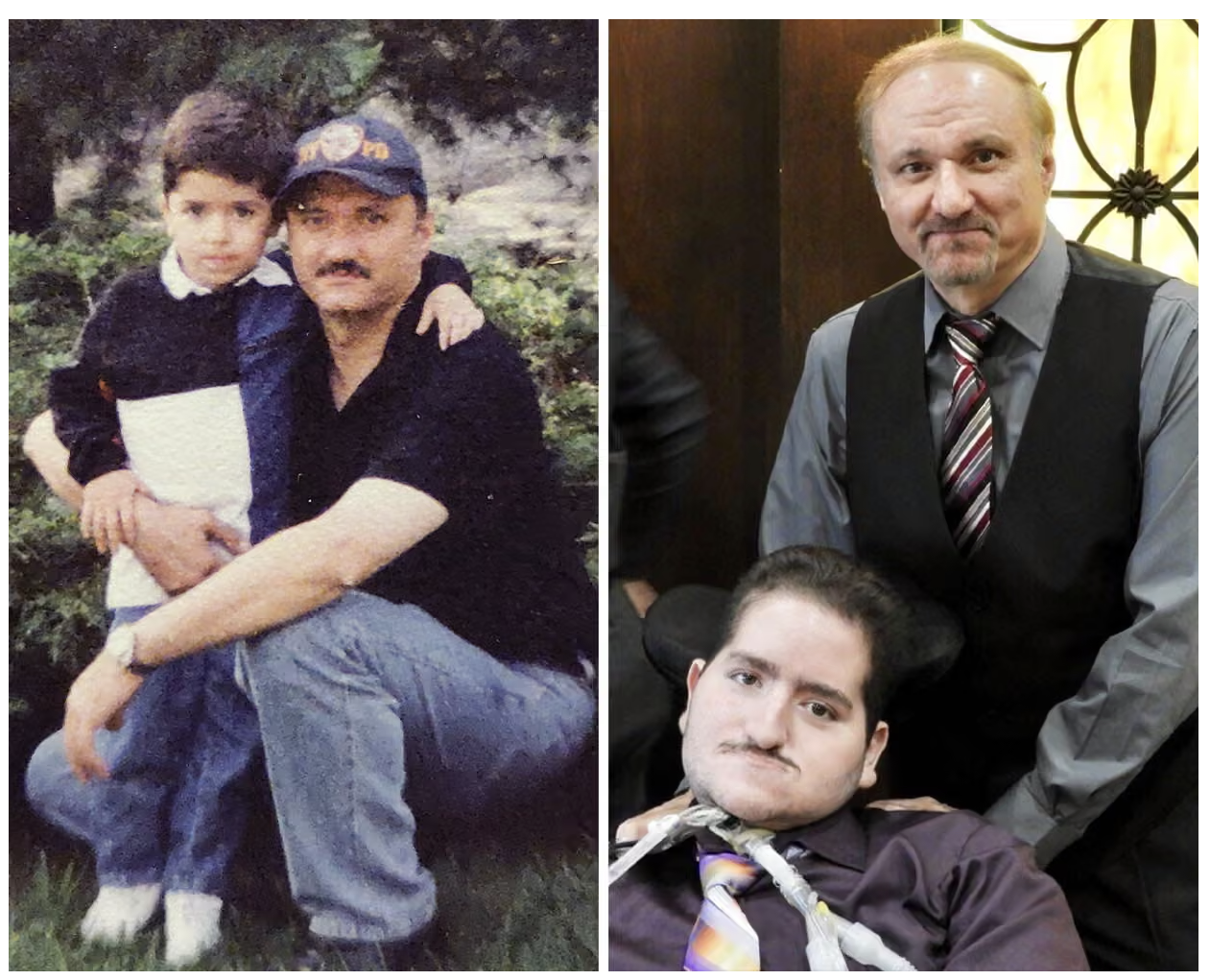
ICE detains Texas father as son’s health declines: ‘Don’t forget about me’ A 62-year-old father named Maher Tarabishi visited the ICE field office in Dallas, Texas, on 28 October as he has done each year for 17 years. Tarabishi, originally from Jordan, is in the US on a supervision order. Even though his asylum claim was denied, the US government allowed him to remain in the country because he is the primary caretaker for his son, Wael, who was diagnosed at four years old with a progressive muscle disorder called Pompe disease.
Maher Tarabishi remains in ICE detention at the Bluebonnet Detention Center in Anson, Texas. Meanwhile, his son Wael, a U.S. citizen, passed away last Friday, January 23rd at the age of 30. As Wael’s health worsened, the Tarabishi family petitioned for Maher’s release so he could resume caring for his son. When that request failed, they asked that Maher at least be allowed to say goodbye. However, authorities denied both requests. Now, the family is pleading for Maher’s release so he can attend Wael’s funeral, although they have little faith that ICE will grant this final request.
If you can, please consider donating to help support the Tarabishi family as they are facing unexpected and overwhelming financial expenses, including emergency medical costs, legal fees, lost income, and basic living needs.
What Deaf and Hard of Hearing People Need to Know About ICE
I came across an instagram reel full of helpful information, asking the question “What if ICE gives you a command, but you’re deaf?”
David: 50,000 of us just marched in Minneapolis to say that what ICE is doing here is not okay, but less than 24 hours later, they shot and killed Alex Pretti in our neighborhood.
Bri: We’re deaf and we’re concerned because ICE relies on verbal compliance, which many of us can’t hear or give.
The law says deaf people are entitled to effective communication when dealing with law enforcement, but based on what we’ve seen the last few weeks here in Minneapolis, ICE doesn’t always respect people’s rights (an understatement, tbh), and that has impacted deaf people, especially deaf people of color.
Screenshots of news articles appear on-screen with the headlines: “Deaf Mongolian immigrant held by ICE in California for 4 months with no access to interpreter,” “Deaf Utah man files federal civil rights lawsuit after encounter with ICE agents outside SLCC,” and “Deaf, mute and terrified: ICE arrests DACA recipient and ships him to Texas.”
David: And most recently, here in Minnesota, a Black deaf man—Ike Murinagi—was wrongfully sent to a detention facility in El Paso. It’s important to stay aware of what’s happening around us and to share information with each other. We’ve included several resources in the caption to help answer questions like the one above, but our list seems small. If you know of more resources in ASL, let us know, we’ll continue to update this post.
Federal agents are heavily deploying chemical irritants. What are the health consequences?
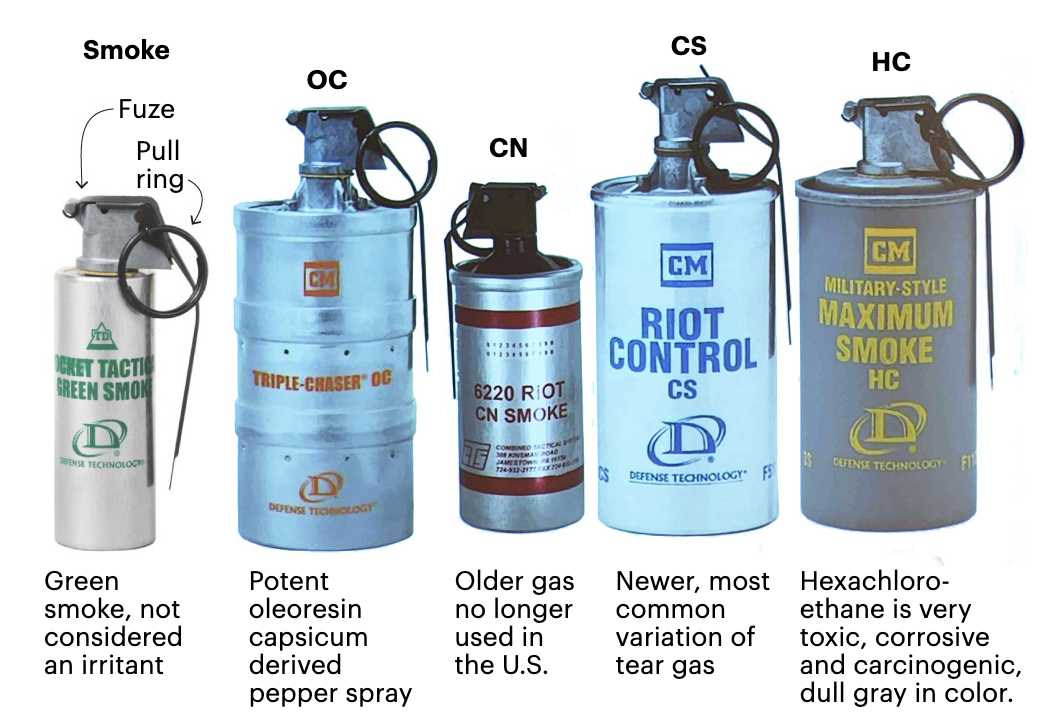
The morning of Jan. 24, after agents killed 37-year-old Alex Pretti in south Minneapolis, agents and State Patrol officers deployed thick clouds of several types of tear gas on the crowd surrounding the scene. Residents found empty canisters afterward listing ingredients including capsaicin, the active component that gives chili peppers their heat.
Tear gas and pepper spray are among a range of substances known as less-lethal crowd control agents. Chemical irritants can injure any part of the body, including eyes, skin, lungs, and mucus membranes.
If you or someone you know develops health concerns or questions after exposure to gases, there are two reporting resources you can use, in addition to consulting your healthcare provider. See the following:
As you document potential exposure, focus on the key terms “adverse reactions” to “unknown chemical agents.” Authorities might request a blood sample for the Minnesota Department of Health lab to analyze. Currently, researchers have limited data on how these chemical agents affect health when deployed this way. So I want people to know how they can contribute to science and help characterize the physical health harms ICE is causing in our community, including documenting adverse reactions to unknown chemical agents.
When I first became a parent, I couldn’t imagine what my child’s adulthood would look like. Even more so as he became a toddler then pre-schooler then kindergartner who was largely non-verbal. I worried about his support needs and what his future might hold. Thankfully, he blossomed at a small charter school Kindergarten through 4th Grade. And now talks my ear off, mostly about his areas of interests. And I do the same since we are both autistic.
Young Adulthood
High school wasn’t without its hiccups. But in his senior year he became Homecoming King. When I was growing up, it would have been unlikely for an autistic student to achieve such a level of popularity. This milestone was exciting for both of us. He still has his crown. And when he started college, he found his friend group in an amazing anime club. He’s got a great social life.
The Era of Underemployment
Unfortunately, work has been more difficult. He started his first job in January 2020. He loved it! But he was laid off just a few months later due to the COVID pandemic. I told him not to worry about working and to focus on college. However, after college graduation, it took nearly six months of applications and interviews to be hired into a service industry job.
His place of employment isn’t far from home for someone who drives, but my son has a history of petit mal seizures. He has a driver’s permit but no license. I intentionally purchased our home near a major bus line. But it takes at least an hour of public transportation each way, which is difficult during Minnesotan winters. He’s been employed there for a year and a half but just barely. They’ve been cutting more of his shifts since Spring. He’s been looking for a service industry job closer to home but receives no response to most applications. If he does receive a response, it’s a rejection. It has been discouraging. He has work experience under his belt along with food handling certification. I would suspect bias against him due to his autism, but he’s being ghosted or rejected before any interactions have occurred.
An Arbitrary Age
Pre-COVID, I’d hoped my son would find full-time employment, with benefits, after he graduated from college. That has not been the case. Then the inevitable happened. He aged out of my insurance in September. That age is currently 26. If I wanted, I could add a romantic partner to my employer-based health insurance but I’m not allowed to keep my most important family member, my son, on my coverage. Instead I’ve spent the last several months attempting to help him get enrolled in Medical Assistance. But we have encountered barrier after barrier.
Functional and Accessibility Errors
I attempted to create his account on MNsure.com but received a vague and unhelpful error message of “Online Service Problems“
My therapist recommended a health insurance broker who could help us navigate this nonsense so I made an appointment.
We encountered the error message because my son does not have a credit score. And that’s how the system validates a person’s identity. Yay, capitalism.
Someone at MNSure had to manually create my son’s account.
Our helper submitted all the documents that were requested of us. We thought.
Weeks later, we found out the request for account creation was denied for not having the proper signature. The broker apologized. She saw that the top of the policy states, “an image of a handwritten signature transmitted electronically, such as by fax, secure email or text message.” But missed that later in the policy it states “the consumer uses a pen to write, ‘I, (consumer’s full name), understand that I am signing MNsure’s Account Request Form to create an online account.’ The consumer then includes a handwritten signature below the statement and writes the date.”
We resubmitted with the full statement.
Several more weeks later, success! The MNsure account was created.
We then logged into the MNSure account to apply for Medical Assistance (this is how it’s set up in Minnesota). Only to encounter another error message:
On Hold
My son has been uninsured since the end of September. I am anxious to resolve this situation. This morning we spent two hours on hold and a handful of minutes actually speaking with someone. Only to learn this latest error was because I’d entered the dashes in my son’s Social Security Number. Which is the usual format. But the form had been built without a required format or help text or a helpful error message. I’ve been a web developer for decades and an accessibility professional for the last 10+ years. I’m annoyed that I didn’t figure this out on my own but it is a clear accessibility failure. Particularly WCAG 3.3.1 Error Identification and WCAG 3.3.2 Labels or Instructions. The site needs to:
Provide necessary instructions that are as specific as possible with the errors so that users can take necessary action.
Provide instructions with the form fields that require specific data or a specific format.
If I am experiencing this much difficulty navigating the application process, I can only imagine how much more challenging it may be for individuals with greater support needs, those who speak English as a second language, caregivers, individuals working multiple jobs, or those with any combination of these circumstances. It’s 2025! It’s not that difficult to build or rebuild / remediate these components to be more usable.
Are We There Yet?
We have gotten much closer to our goal. I am thankful he has no pre-existing medical conditions or prescriptions, other than an epi-pen for a bee sting allergy. But I won’t fully relax until we receive confirmation my kid is enrolled in Medical Assistance with all of his selections chosen. I hope we won’t encounter any additional barriers on that journey. Wish us luck!
* The title of this post comes from a piece of hold music by Harriet Goldberg that we heard over and over again this morning. I shazamed it and it turns out there is an interesting story behind the song.
AuDHD is a term used by people who are both autistic andhave ADHD. It’s not yet a formal diagnosis in medical systems, but many people recognise the crossover in their lived experience. They might be diagnosed separately with autism and ADHD, or just feel that both neurotypes describe their reality. The term gives language to something that otherwise gets missed, mislabelled, or misunderstood. Because being both autistic and ADHD often means living with a complex, beautiful mix of traits that don’t always fit existing boxes.
While ADHD and autism are distinct conditions, they commonly co-occur. It’s believed that 50-70% of autistic people also have ADHD.
It was only in 2019 that the International Classification of Diseases (ICD-11) recognised that a person could have both ADHD and autism.
I have a formal diagnosis of Autism Level 1 with Severe ADHD. I received my diagnosis at the age of 50. That makes me one of the many folks now identifying with AuDHD, thanks to increased awareness, improved diagnostic methods, and broadened definition of the conditions.
Early on, I was identified as having unique needs. But I was identified as a gifted child rather than an autistic one, or one with ADHD. I received no supports — other than being taken on cool field trips once in a while. Some classmates, almost always boys, were frequently reprimanded for their short attention spans and frequent outbursts. In grade school, one kid flipped over his desk over more than once. That behavior alarmed me and I associated it with my limited understanding of ADHD at the time.
I internalized my emotions and neurodivergent traits and became highly anxious. Teachers scolded me for daydreaming, but I usually had the correct response when called upon. I could come up with answers intuitively, without showing my work. And would have to reverse engineer to illustrate how one would reach a certain solution, even when the solutions themselves came to me effortlessly. Later the dreaded phrase “high potential, underachiever” would appear on my report cards. Without taking into account any other support needs I might have, or what was going on at home.
Why has there been an increase in diagnosis of adults?
People go undiagnosed for all manner of reasons. The stereotype of autism as a male condition (the diagnosis was 4x more common in males than females) is one factor. Teachers might notice the boy who constantly walks the playground perimeter while the rest play football, but overlook the girl who copies everything about a school friend in an effort to fit in. Such masking occurs in all genders and is damaging in itself.
Before 2013, when the DSM-5 was released, ADHD and autism were officially mutually exclusive. If you had one, you could not be diagnosed with the other. Since then there have been:
I’ve had people question my decision to pursue a diagnosis. Asking “why bother? You’ve made it this far in life.”
“Why do you need a label?” Because there is comfort in knowing that you are a normal zebra, not a strange horse. Because you can’t find a community of other zebras, can’t learn what makes a zebra thrive, what brings [you] a zebra joy, if you don’t know you are a zebra and you are learning solely from horses. It is near impossible to be happy and mentally healthy if you’re spending all your life thinking you’re a failed horse, having others tell you you are a failed horse, when all along you could be thriving and understood if everyone, including you, just knew you were a zebra.
Diagnosis (formal or self-diagnosis) is a framework for self-compassion, advocacy, and empowerment. Don’t let others delegitimize your concerns.
Life with AuDHD
I lived too much of my life without understanding what made me different. Raising my now-adult son, who is autistic, helped me find my way. But it’s only been the last 10+ years that I really started getting to the bottom of it. Before that, I was a solo parent with three jobs and very little bandwidth for much else. I was frequently overwhelmed and exhausted. Pursuing a formal diagnosis is a privilege I do not take lightly. But there are so many resources available now; self-diagnosis is valid. If you’re spending a lot of time reading about autism or ADHD, or joining us over at Neurodivergent TikTok or instagram, etc. wondering if you are one of us, you most likely are. I doubt neurotypical people spend much time wondering if they are neurodivergent or not. But what do I know, I am neurodivergent!
I appreciate the studiesshowthings instagram account. It’s a married couple with one neurotypical partner and one AuDHD partner. Their reel today was particularly relevant to me:
People who are autistic and ADHD (50% of people with ADHD are also autistic) – the AuDHD brain wakes up in a fist fight every day because the ADHD brain craves novelty. And the autistic brain craves consistency. The autistic neurotype wants things to be predictable and certain. The ADHD neurotype wants things to be novel and interesting at all times. You can see how this can create a problem. A thousand things a day trigger the fight or flight response. It’s easy for the AuDHD neurotype to feel overwhelmed.
The beginning of the pandemic was life-changing for me. I mourned those whose lives were lost or negatively impacted, but I found lockdown to be a reprieve. I have been a full-time tech worker since I was 18 years old and didn’t realize how burned out I was. And everything changed. Working from home full-time has been miraculous for my neurotype. I learned three critical things:
Understanding my neurotype / self-knowledge
Identifying needs and triggers
Knowing my strengths and challenges
Clear communication
Using direct, clear language
Preparing for important conversations in advance
Saying no
Energy management
Take breaks
Have self-compassion
Foster a support network
A trusted therapist
Friends and family who are also neurodivergent
Neurodivergent slack and social media communities
These things have helped me advocate for myself and set healthy boundaries to prevent overwhelm.
Despite the grim state of things in the US, it is still Disability Pride Month. And I have multiple non-apparent disabilities: Endometriosis, migraines, occipital neuralgia, misophonia, autism + ADHD (sometimes shortened to AuDHD). One aspect that is less commonly discussed is proprioception.
Proprioception
My understanding of proprioception began when my son was diagnosed with autism. It is one of many factors that motivated me to pursue an autism assessment for myself. Proprioception, often referred to as the body’s “sixth sense,” is awareness of one’s body position and movement in space. It encompasses sensations such as muscle contraction and stretching, as well as deep pressure or squeezing.
My son tends to be under-responsive to proprioceptive stimuli, while I experience hypersensitivity: “Individuals who are oversensitive to proprioception may have difficulty comprehending where their body is relative to other objects.”
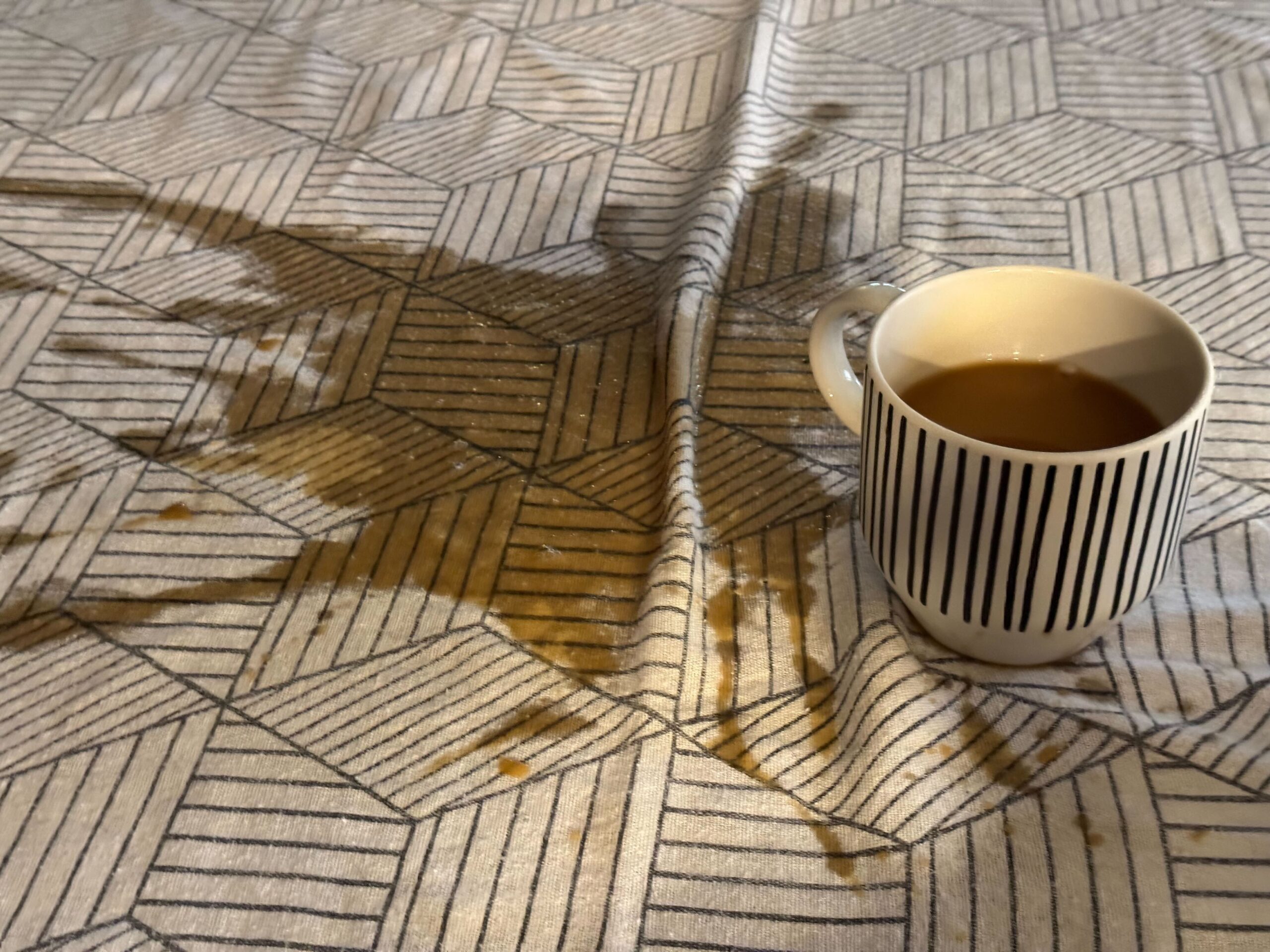
After I went to the gym last night, I fumbled my giant container of protein shake powder and spilled it all over the floor. This morning I knocked my coffee mug over. I often find my phone and other objects slipping from my hands. This clumsiness can be a nuisance. But I’ve also dropped vital prescription medication while trying to take it and even fumbled entire bottles of prescription meds.
Other aspects of hypersensitivity can be more difficult
Increased pain perception. While some autistic people may exhibit a higher tolerance for certain types of pain, many experience heightened pain sensitivity and may feel pain more intensely than others. This can manifest as a lower pain threshold or a prolonged experience of pain, even from stimuli that might others might find tolerable.
Heightened tactile sensitivity. Autistic people may experience heightened sensitivity to touch, pressure, and movement. This can lead to increased awareness of physical contact and, in some cases, discomfort or pain from specific textures of clothing or being jostled in crowds. Crowds are particularly tough for me due to my height (barely five feet tall).
Increased sensitivity to certain sounds. Sounds might seem louder to an autistic person, which might make them react to sounds more strongly. This is where my misophonia comes into play, personally.
Working with my neurologist, a physical therapist, and a personal trainer have helped manage these sensitivities to some extent but not everyone has access to these resources. Family members, friends, coworkers, and classmates have teased me about my clumsiness. I encourage others to consider the impact before commenting on someone else’s clumsiness or sensitivities.
In the Twin Cities, we are fortunate to have a wonderful organization called Minnestar:
Minnestar exists to build, nurture and engage those interested in technology through meaningful connection. Our goal is to promote connections that help our community learn from each other, build their businesses, and start new entrepreneurial ventures. We aim to foster a thriving and connected tech community for all in Minnesota.
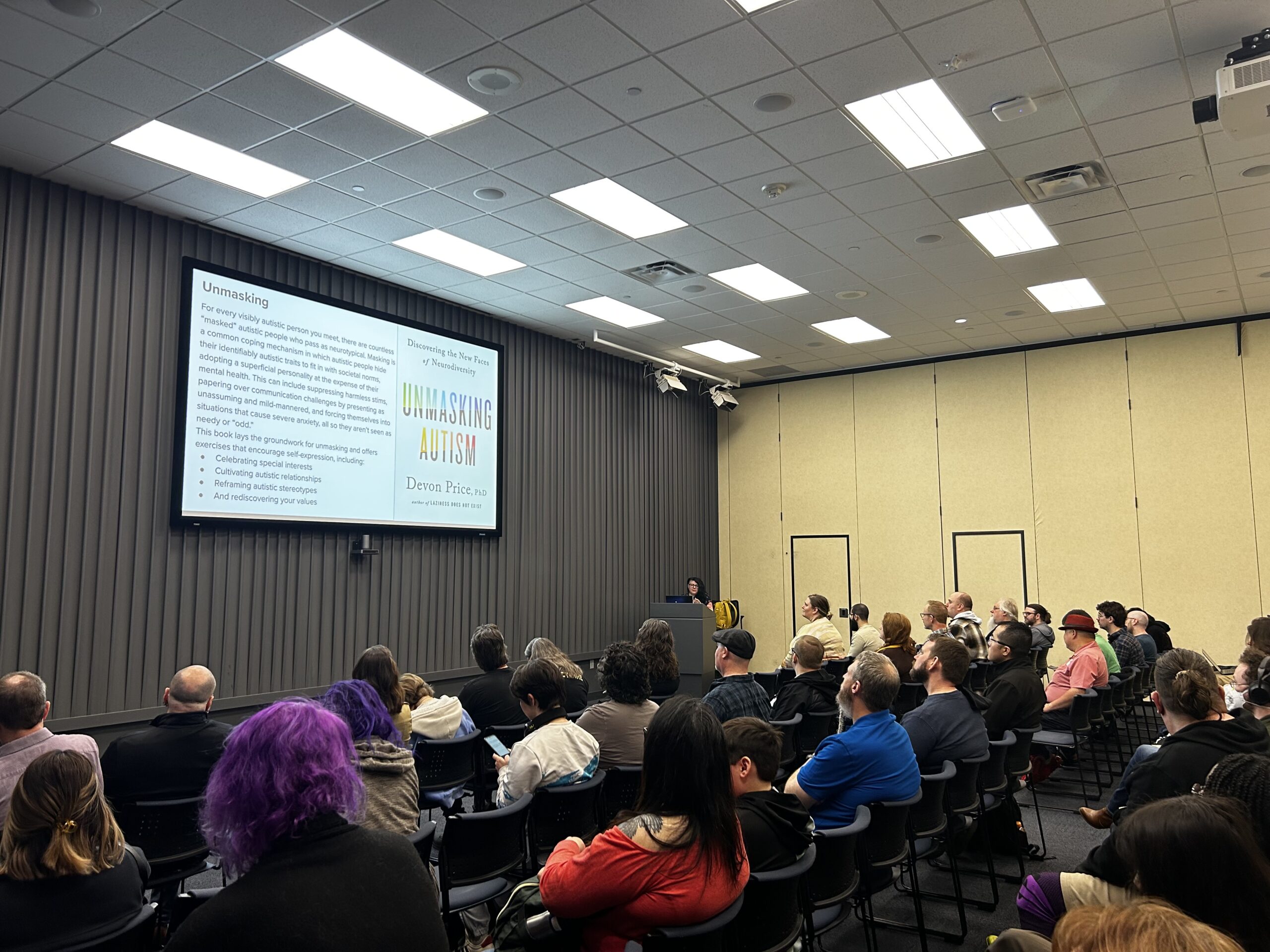
They put on the annual Minnebarunconference. I have been attending since the early days. Earlier in my career, I had issues with self-confidence and imposter syndrome. I never imagined I could be a presenter at Minnebar. It took decades of working in tech with years of running training sessions, teaching web development at the college level, and years of therapy. Then I realized I could, in fact, successfully present a session at Minnebar. I actually submitted my presentation idea while I was attending another event, the CSUN Assistive Technology Conference. The full title of my talk is a mouthful. Choose Your Own Adventure: Pros and Cons of a Formal Autism / ADHD Diagnosis vs Self-Diagnosis. Growing up, I was a huge fan of the Choose Your Own Adventure books.
The stories are formatted so that, after a few pages of reading, the protagonist faces two or three options, each of which leads to further pages and further options, and so on until they arrive at one of the many story endings.
I submitted my talk idea before the United States Secretary of Health and Human Services, RFK Jr., ramped up his misinformation campaign about autism and suggested creating a national registry to track those of us with ASD. What he and the Trump administration are doing is dangerous and wrong. I modified my talk somewhat in light of these developments. I delivered this talk in person on May 3rd, 2025 and went over these very real choose your own adventure options, walking through the Pros and Cons of:
A formal diagnosis through health insurance
A formal diagnosis through a private provider (out of pocket)
Self-diagnosis via vetted, trustworthy resources
While balancing the privacy implications of each with their potential benefits. I didn’t record my talk but I am sharing the slides. Last year I was invited to deliver a variation of this talk to another company’s Neurodivergent Employee Resource Group. I would be happy to speak to this or related topics at other organizations. Feel free to reach out to me at info@sharynmorrow.com.
International Wheelchair Day is observed every March 1st. I am interested in physical accessibility as much as digital accessibility, but especially the point where the two meet. Where technology can improve physical accessibility by removing barriers or at least warn folks about them. Recently, I came across an older project that came out of “Random Hacks of Kindness” in Berlin called Broken Lifts.
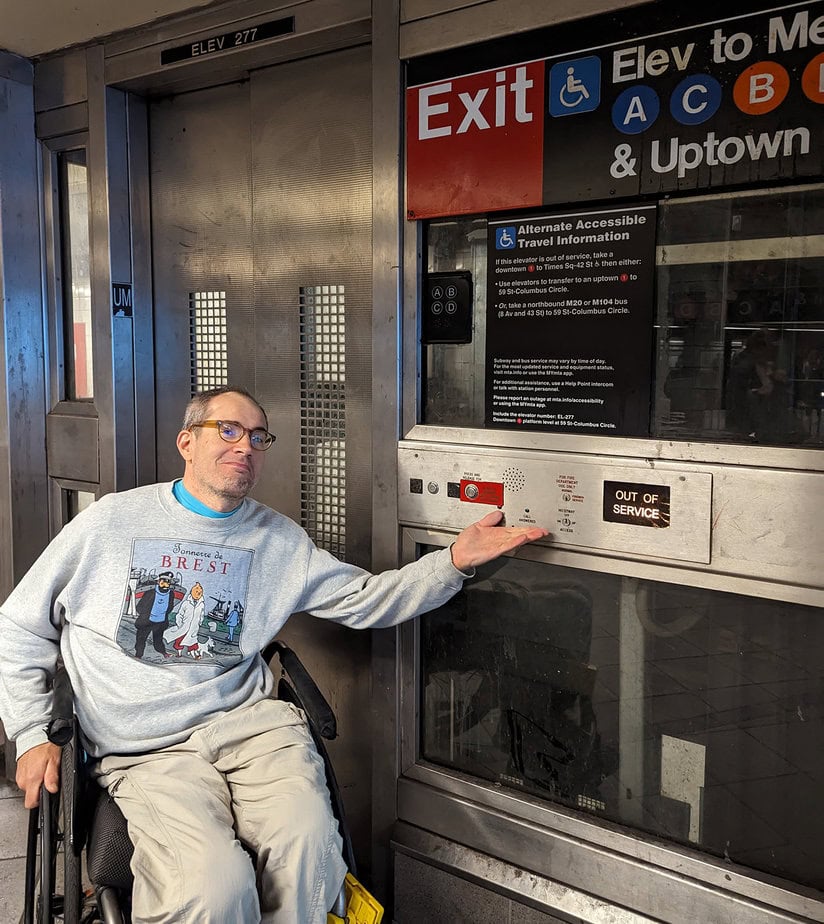
Broken elevators at train stations are a big problem for people who rely on wheelchairs and walking aids, but also for families with strollers. That’s why it’s important to find out about breakdowns in good time. Of course, complex machines like elevators can occasionally break down. Vandalism does the rest. For this reason, BrokenLifts was created – a project by the SOZIALHELDEN association and the Berlin-Brandenburg transport association in collaboration with the HENKELHIEDL project office for the automated visualization of elevator breakdowns in local public transport in Berlin. The elevator malfunction information from the Berlin S-Bahn and the BVG is retrieved, analyzed and bundled every 15 minutes as a database.
The same folks who came up with Broken Lifts are behind wheelmap.org, a map for finding wheelchair accessible places. Anyone can contribute and mark public places around the world according to their wheelchair accessibility.
Google
Of course, there’s a bigger player on the scene. In 2020, Google Maps launched a mode called Accessible Places. When toggled on, it more prominently shows wheelchair accessibility info.
“When Accessible Places is switched on, a wheelchair icon will indicate an accessible entrance and you’ll be able to see if a place has accessible seating, restrooms or parking,” Google explains in a blog post. “If it’s confirmed that a place does not have an accessible entrance, we’ll show that information on Maps as well.”
Updated Live View experiences for users who are blind
A new identity attribute label for disabled-owned businesses
“It’s a basic human right to enter a place like anybody else,” says Sasha Blair-Goldensohn. This simple ideal can seem maddeningly out of reach for wheelchair users in America’s largest and most expensive metropolis. But for Blair-Goldensohn, a 48-year-old software engineer and United Spinal member from New York City, it’s the driving force of his life.
Though his work at Google touched on its Maps technology, Sasha Blair-Goldensohn wasn’t thinking much about the actual route-finding features — how people get from A to B. That changed one morning while he was walking through Central Park to catch the subway and a 100-pound tree limb fell on him. The limb fractured his skull and he sustained a T5 spinal cord injury.
New York City has one of the best subway systems in the U.S., but only if you can navigate stairs. Blair-Goldensohn’s Manhattan commute was hampered by the Metropolitan Transportation Authority system. More than 30 years after passage of the Americans with Disabilities Act, it still lacked wheelchair access in nearly 75% of commuter train stations.
Advocacy
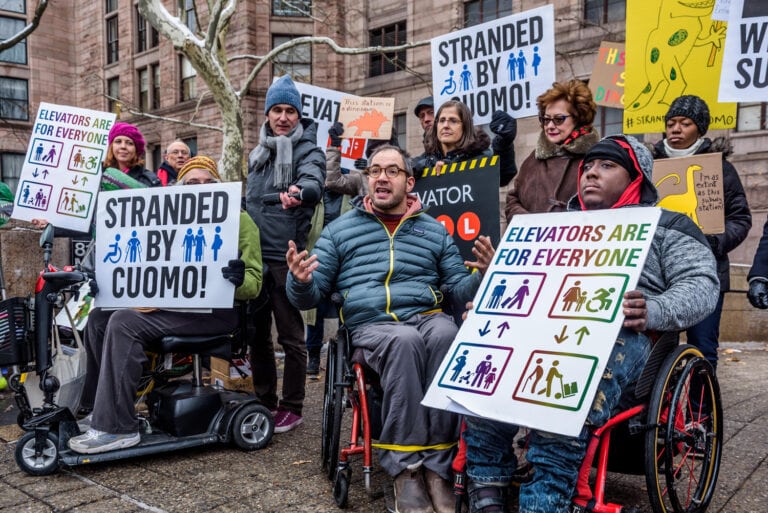
Sasha Blair-Goldensohn stepped up his advocacy by working with legal nonprofit Disability Rights Advocates to bring a class action lawsuit. Blair-Goldensohn served as one of the plaintiffs alleging violations of the New York City Human Rights Law due to the subway system’s inaccessibility. It took six years, but in April 2023, a judge approved a final settlement compelling the Metropolitan Transportation Authority to budget for and “add elevators or ramps to create a stair-free path of travel [in] at least 95% of the system’s currently inaccessible subway stations by 2055.”
Subway elevators were frequently broken down, further limiting mobility and inclusion. “You are either stuck on the inside or the outside,” he says. “In one situation, at least you are on the surface, but you realize there’s no way home because the elevator is shut down for who knows how long. In the other situation, you are several flights of stairs down and you have to rely on strangers to carry you out.”
Sasha Blair-Goldensohn
Accessibility + Technology
For accessibility information to be helpful, it needs to be comprehensive and widely available. Collecting all the information needed to create a useful accessibility map is a big task. Fortunately, a software engineer at Google, which has the most popular free mapping app in the world with over a billion users each month, has become a strong advocate for accessibility. When Blair-Goldensohn returned to his job after his injury, it quickly became clear that his skills and understanding of what people with disabilities need made him a perfect fit for this work.
Since then, he has been working to improve the accessibility information available on Google Maps. In 2017, Google introduced a feature that lets users add details about the accessibility of places they visit. Now, Maps can show if a location has a wheelchair-accessible entrance, marked by the ♿ icon, as well as accessible seating, restrooms, and parking. In 2018, Blair-Goldensohn led a project to display wheelchair-accessible routes for public transportation.
Google Maps depends on its users to share information about various features, from what businesses offer to travel times and directions. Before last summer’s Paralympics, Blair-Goldensohn’s team met with Paralympic athletes to inform them about the accessibility features on Google Maps and to gather their experiences using the service while traveling abroad.
For Blair-Goldensohn, whose work revolves around universal design, it’s hard to understand why you would do things any other way. To him, working toward a world that can be accessed by everyone, benefits everyone. “Solidarity is powerful,” he says. Agreed!
One of the best parts of my job is curating our monthly Accessibility Community of Practice meetings. I like to tie into monthly awareness campaigns. For January, I highlighted World Braille Day and Braille Literacy Month. But then jumped into some particulars. Like sharing a video from one of my favorite folks, Anthony Ferraro, a blind athlete, musician, motivational speaker, and podcaster. His catchphrases are “the only disability is a bad attitude” and “one love.”
Some fun podcasts
Talk Description to Me podcast
Where the visuals of current events and the world around us get hashed out in description-rich conversations. J.J. Hunt is an innovative Audio Describer and a natural-born storyteller. Christine Malec is a perpetually inquisitive member of the blind and partially sighted community who’s always wondering about something.
In Talk Description to Me, their discussions plunge into current events and topical issues to explore the content of important images and help place vivid descriptions in their cultural context. Lively, hard-hitting, witty, vibrant, and fun, this is conversation with a view!
Say My Meme is exactly what it sounds like: A podcast that literally describes the world’s most relevant memes, bringing the blind and sighted people together through laughter and the power of visual description. Brought to you by Will from Be My Eyes and Caroline from Scribely.
Blind beauty expert and journalist Lucy Edwards recently sent in a request to Say My Meme, for beauty and makeup memes. Lucy joined as their first guest host to talk all memes skincare, makeup and more.
In our monthly meetings, I also have Accessibility Hall of Shame and Hall of Fame sections. The Hall of Shame section often features accessibility overlays and why they are terrible. For our January Hall of Fame, I highlighted a resource I came across called Accessible Social. This is a free resource and education hub that shares best practices for creating accessible and inclusive social media content. Guides include best practices for sharing: