The Americans with Disabilities Act (ADA) was signed into law on July 26, 1990. This was decades in the making. For those unfamiliar with the history, one great starting point is the 2020 documentary Crip Camp: A Disability Revolution. Growing up, I didn’t have any summer camp experiences (we were too poor). But I sent my son to a summer camp with an autism inclusion program. He wouldn’t have been able to attend otherwise. This program was in place thanks to the work of those who came before us. Disability Pride Month has been celebrated in July since 1990, along with the ADA victory. The disabled community isn’t a monolith. But members come together to support one another. Disability justice movements advocate for intersectional approaches to meet the needs of people with disabilities. The “nothing about us without us” mantra was born from this movement, expressing the conviction of people with disabilities that we know what is best for us.
Disability Pride Month looks to celebrate disability as an identity by sharing the experiences of the disabled community. The reason behind the month is a chance to share the joy and pride that disabled people can bring to their local and global communities. The disabled community is a vibrant part of society and makes up 15% of the population, and we are proud of that.
Caroline Casey for Forbes
This is the perfect time to remind folks about the anthology, Disability Visibility: First-Person Stories from the Twenty-First Century, edited by Alice Wong.
One in five people in the United States lives with a disability. Some disabilities are visible, others less apparent—but all are underrepresented in media and popular culture. Now, just in time for the thirtieth anniversary of the Americans with Disabilities Act, activist Alice Wong brings together this urgent, galvanizing collection of contemporary essays by disabled people.
Disability Visibility at Penguin Randomhouse
From Harriet McBryde Johnson’s account of her debate with Peter Singer over her own personhood to original pieces by authors like Keah Brown and Haben Girma; from blog posts, manifestos, and eulogies to Congressional testimonies, and beyond: this anthology gives a glimpse into the rich complexity of the disabled experience, highlighting the passions, talents, and everyday lives of this community. It invites readers to question their own understandings. It celebrates and documents disability culture in the now. It looks to the future and the past with hope and love.
And Alice Wong is at it, again. This time with a memoir! I’ve pre-ordered my copy from my favorite local bookstore, Moon Palace. You can support local bookstores too!
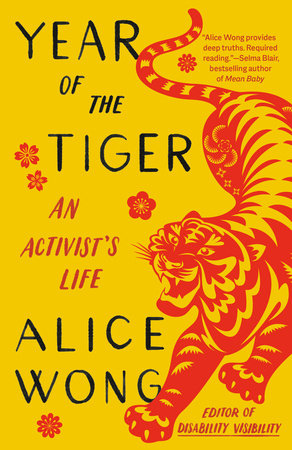
1 CommentThis groundbreaking memoir offers a glimpse into an activist’s journey to finding and cultivating community and the continued fight for disability justice, from the founder and director of the Disability Visibility Project
Year of the Tiger at Penguin Randomhouse
In Chinese culture, the tiger is deeply revered for its confidence, passion, ambition, and ferocity. That same fighting spirit resides in Alice Wong.
Drawing on a collection of original essays, previously published work, conversations, graphics, photos, commissioned art by disabled and Asian American artists, and more, Alice uses her unique talent to share an impressionistic scrapbook of her life as an Asian American disabled activist, community organizer, media maker, and dreamer. From her love of food and pop culture to her unwavering commitment to dismantling systemic ableism, Alice shares her thoughts on creativity, access, power, care, the pandemic, mortality, and the future. As a self-described disabled oracle, Alice traces her origins, tells her story, and creates a space for disabled people to be in conversation with one another and the world. Filled with incisive wit, joy, and rage, Wong’s Year of the Tiger will galvanize readers with big cat energy.