Skip to content

Category: neurodiversity

Creating a More Humane Social Order

Writer, disability-justice activist and performance artist Leah Lakshmi Piepzna-Samarasinha knows that it’s possible for society to become more equitable. They envision a future in which “people are free to be, regardless of their ability to fit into capitalist institutions.”

‘The Future Is Disabled’ book review from Ms. Magazine

I’m excited by the work of activists like Leah Lakshmi Piepzna-Samarasinha. And their latest book that “lays out a bare-bones agenda for what is needed to make the U.S. more socially just: affordable, available and accessible housing; healthcare and pharmacare; a universal basic income for all residents; free, high-quality public education programs; and the elimination of punitive policing and incarceration.” A resounding YES PLEASE to all of it!

Unfortunately, the systems in place are resistant to change. Instead, those in power propose much smaller, incremental tweaks. For example, recently the State Department announced the finalization of their Five-year Diversity, Equity, Inclusion, and Accessibility (DEIA) Strategic Plan. Don’t get me wrong, this more intersectional approach is a step in the right direction. But it will only protect federal employees. Only 20% of people with disabilities are employed, compared to 64% of non-disabled people, according to the U.S. Bureau of Labor Statistics. That’s a huge gap. Only 4% of DEI initiatives include disability and that’s just in organizations that even have a DEI initiative. Most companies don’t have their disabled employees or customers in mind. A perfect example came from the amazing Meryl Evans. Yesterday she posted about her experience with an Apple Watch, and more.

“People with disabilities can bring a lot more to your team than what you see on their resumes.

They have an uncanny ability to come up with innovative ideas and solutions. Feeling excluded has a way of driving people with disabilities.

For instance, I never wanted an Apple Watch. I hadn’t worn a watch in years. A friend convinced me to try it. It made my life as a deaf person easier!

How? It became an accessibility tool.

It buzzes when cooked food is ready. No more overcooked food! It buzzes when someone is at the door. No more packages sitting on the porch for stealing. No more leaving my sister stranded on my doorstep when she dropped by unexpectedly.

No one advertises these benefits. Apple never marketed it that way. If they had, they may have gotten more buyers and fans.

These are examples of how someone who is different from you can innovate and come up with creative solutions.

We don’t always click when we meet someone. This isn’t because of a bad interview. We tend to click with those most like us. You’ll gain more when hiring someone different from you.

The thought of creating a more accessible hiring process feels overwhelming. Just start. How can you get started?

– Ask every candidate what accessibility they require.
– Verify the online application process is accessible for keyboard-only navigation and works with screen readers.

These are starting points. Keep working on it and adding more pieces. Progress over perfection. Just start.”

Again, yes to all of these things! I’m neurodivergent and have an auditory processing disorder. I wear noise-canceling headphones a good portion of the day. The Apple Watch’s haptic feedback has made my life so much easier too. And I want that for others. There’s so much we could do, as a society, to improve the quality of life for our fellow humans. But the pace of change is moving too slowly. More people are being forced to survive with less…while profit margins are on the rise for those at the top. We could all be thriving instead.
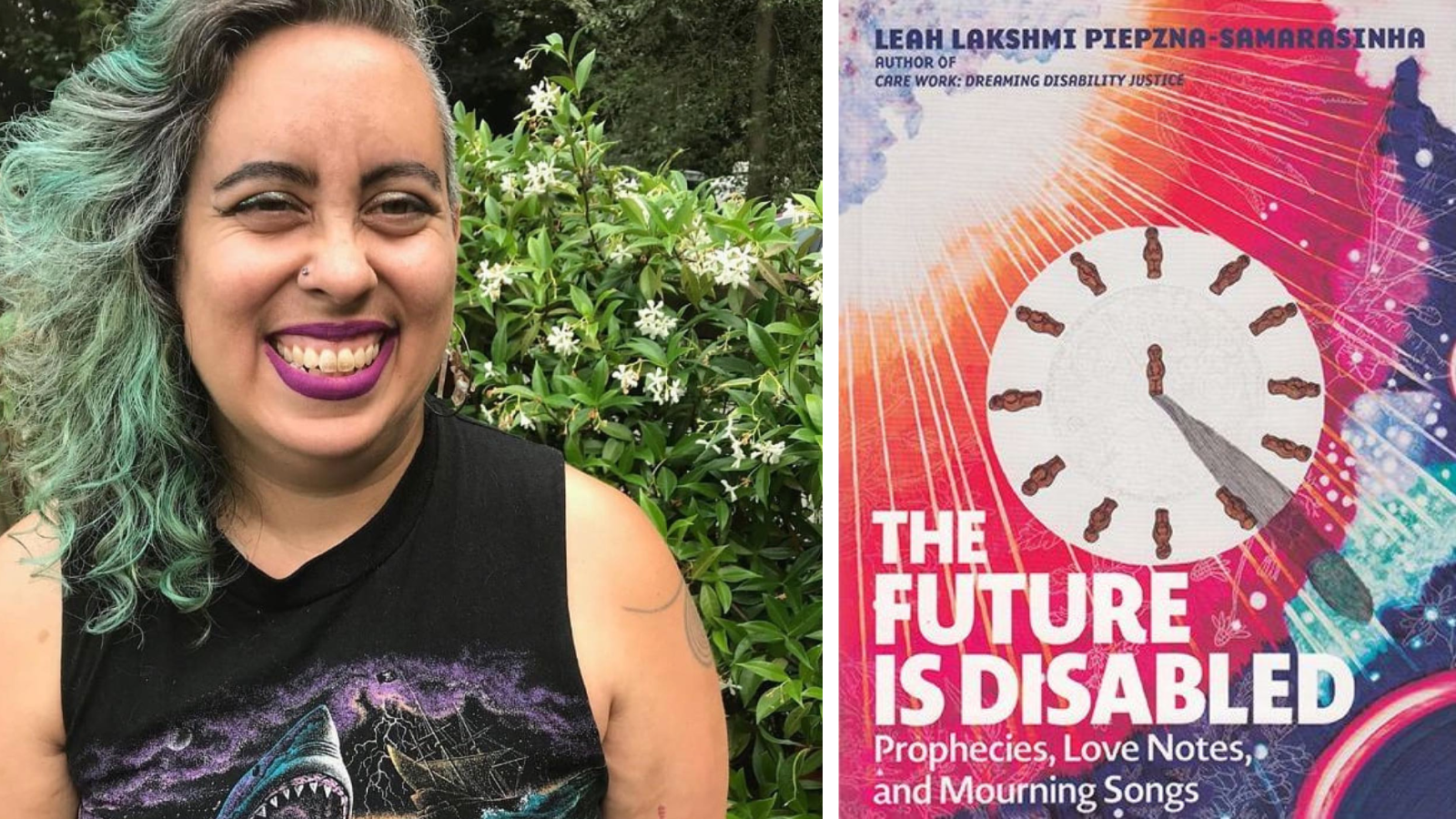
Author Leah Lakshmi Piepzna-Samarasinha on the left, a femme non-binary person with green hair, and the cover of their book on the right, The Future Is Disabled
Leave a Comment

Ableism in the Gun Violence Debate

Mass shootings have become commonplace in this country. Many of us have been impacted by them. My brother-in-law was murdered in a workplace shooting in Minneapolis in 2012. After each of these tragic events, we hear unhelpful platitudes like “thoughts and prayers” and “never again” statements from politicians. Along with more dangerous rhetoric, pinning the blame on mental health instead of our country’s pervasive gun culture and the powerful and effective lobbying efforts of the NRA. I’ve always been bothered by that. But disability advocate Kelsey Lindell broke it down in a way that resonated with me:

Whenever something horrific happens we hear politicians opposing gun laws spew lines that lobbyists wrote for them:

“Guns don’t kill people, people kill people.”
“We don’t have a gun problem we have a mental health problem”

When people who oppose gun control use statements that blame mental illness rather than our gun violence epidemic for horrific murders two things happen:

Mental health, or any neurodivergency, is further stigmatized and politicians push blame off of themselves and onto people who’s brain works differently than theirs.

Ableism works alongside other forms of systemic bias or oppression because it is a part of what co-creates the idea of an “ideal” expectation of body and mind: a non-disabled body and mind. These forms of systemic oppression combine with an implicit bias to label any body or mind form that is “other”than that “ideal” as “less than.” Politicians push the blame off of themselves and ONTO individuals who have mental illness. This increases the fear and stigma that people with mental illness deal with AND gets people to stop talking about gun control and start talking about mental illness instead.

So next time you hear someone saying we don’t have a gun problem, that this is a mental health issue: tell them two things.

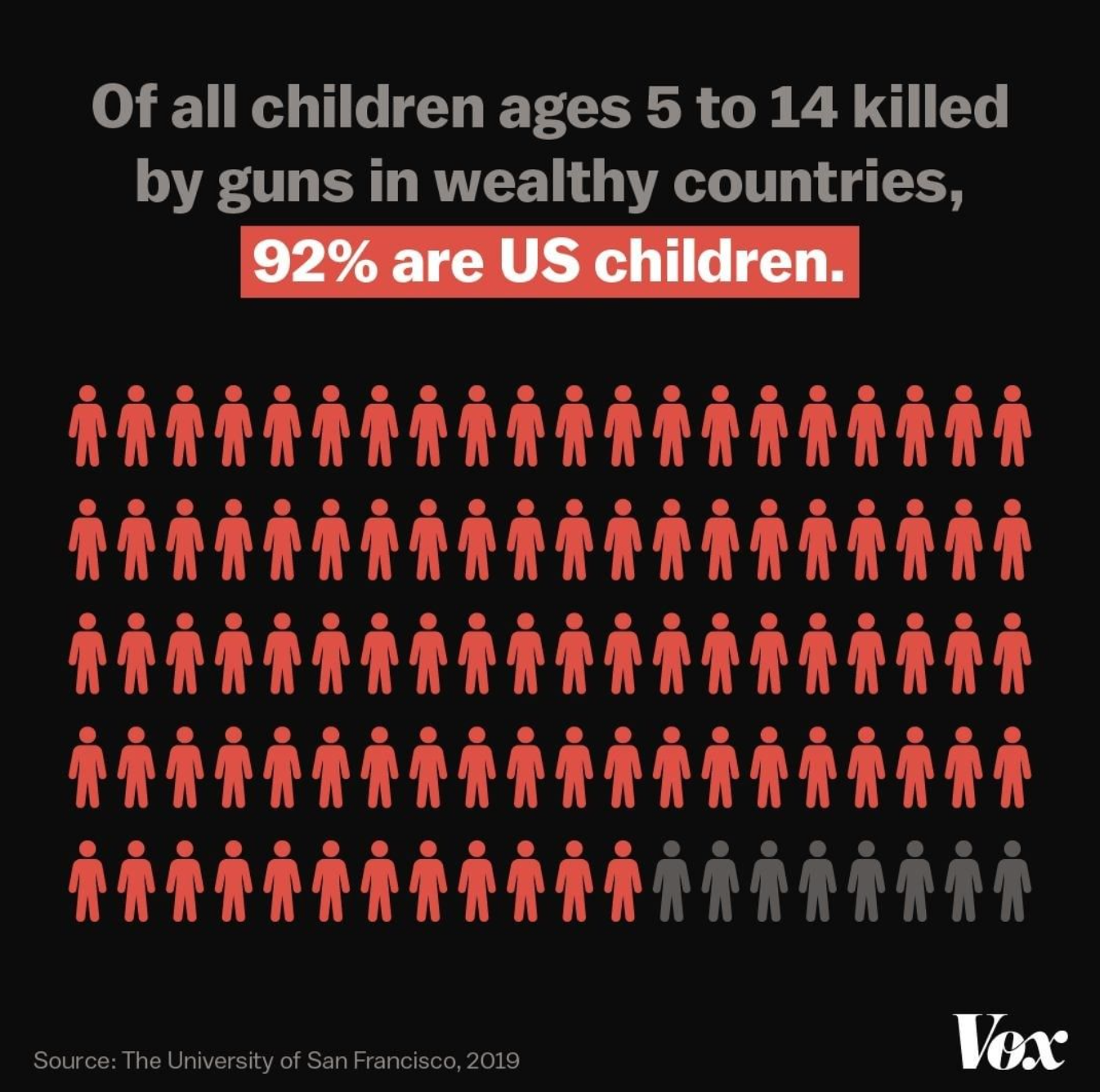
1. Reality check: the USA isn’t the only country in the world where people are mentally ill. We ARE the only country that has 12 children die from gun violence and another 32 shot and injured EVERY DAY. Plus, studies show that mental illness contributes to only 4% of all violence, and the amount to gun violence is even smaller.

2. That’s ableist. We need gun control now.

Disability Advocate Kelsey Lindell
Graphic with the text reading "of all children ages 5 to 14 killed by guns in wealthy countries, 92% are US children."
From Vox’s article America’s unique, enduring gun problem, explained
Leave a Comment

Neurodiversity Career Connector

April was Autism Acceptance month, but neurodivergent people need to be accepted all year round. So I was happy to read about a newly launched job site. It was created to help neurodivergent folks find meaningful work without barriers. The job search and job interviews, in particular, can be difficult. Neurodivergent applicants often feel overwhelmed and misunderstood. But this site aims to connect employers interested in more inclusive hiring with neurodiverse candidates seeking employment.

…the Neurodiversity Career Connector features job listings by U.S. employers seeking applicants with autism spectrum disorder, attention deficit hyperactivity disorder (ADHD), dyslexia and other conditions associated with neurodivergent, or atypical, brain functioning.

Microsoft Features

If neurodivergent candidates can make it through the door, they have so much to offer employers! From Dr. Nancy Doyle’s site:

Neurodiversity can be a competitive advantage when the individuals are in the right environment, making use of their strengths, instead of constantly trying to overcome challenges. To achieve this we must create inclusive spaces to work and learn that reduce disabling factors and amplify diverse abilities.

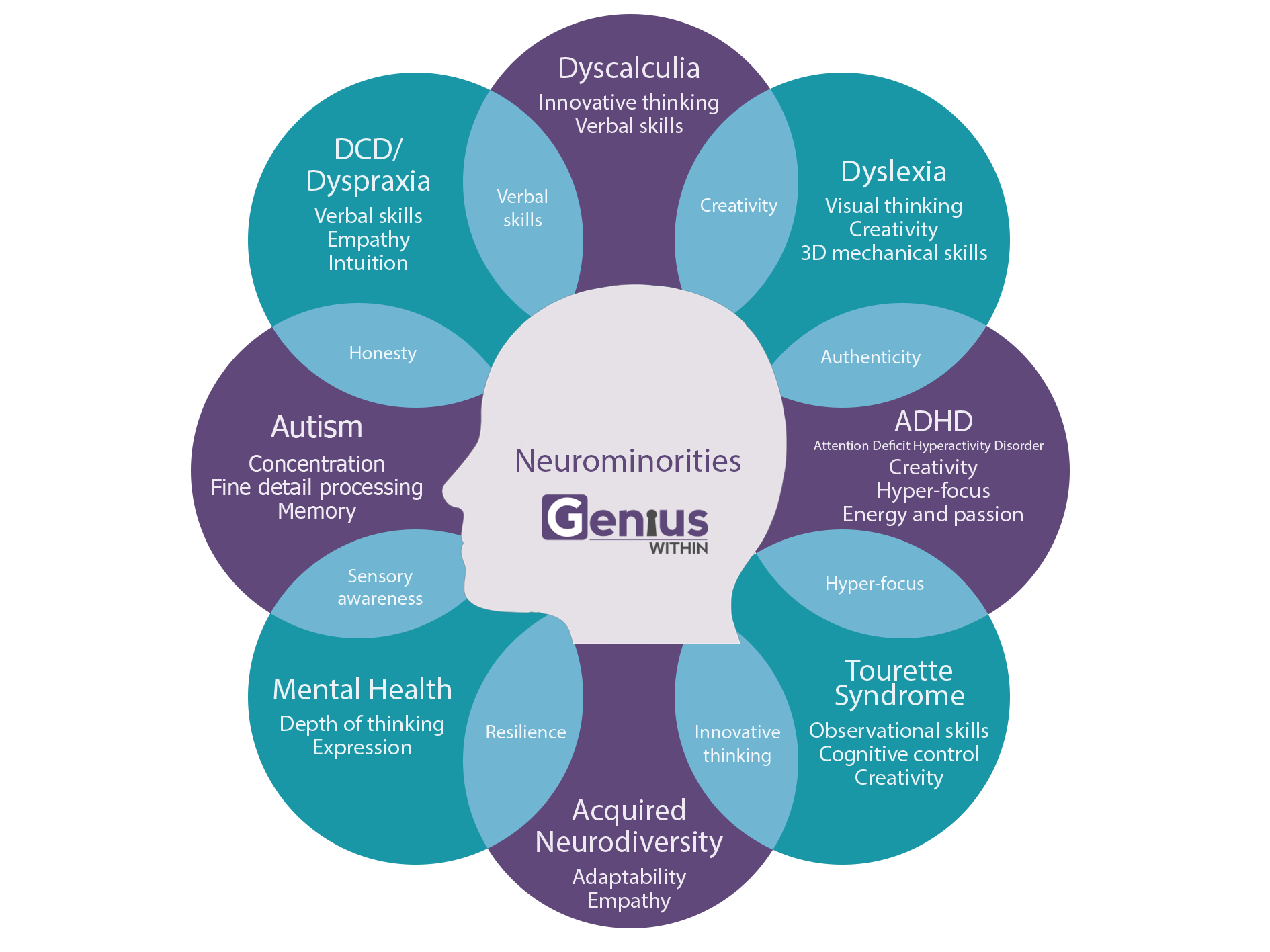
Genius Within
neurodiversity chart of attributes by condition

If you want to learn more, check out this podcast episode “Addressing the Needs of Neurodiverse Individuals in the Workplace: an Interview with Dr. Nancy Doyle.” If you follow that link, a full transcript is available on the page as well.

Leave a Comment