What’s Happening?
Operation Metro Surge is an ongoing initiative conducted by the United States Immigration and Customs Enforcement (ICE), purportedly aimed at apprehending and deporting immigrants. Initially, federal agents targeted Minneapolis (where I live) and Saint Paul (where I grew up and raised my son for his first 12 years) then expanded to all of Minnesota. Tragically, federal agents killed two civilians, United States citizens Renée Good and Alex Pretti, during this operation. ICE continues to stop, harass, and detain people regardless of their citizenship status.
Federal immigration enforcement has disrupted daily life in Minnesota: schools have closed or switched to virtual learning, and people fear leaving their homes or going to work. Community members in Minnesota are actively organizing and responding to these challenges.
On Friday, January 23rd, over 1,000 Minnesota-based businesses closed in protest, and tens of thousands of people gathered in sub-zero weather to march against the operation. Likewise, the governor and attorney general of Minnesota have publicly challenged the operation, asserting that its primary purpose appears to be retribution instead of immigration enforcement.
The Atlantic has a good piece about the Minnesotan pushback against ICE. The Stand With Minnesota website is a comprehensive collection of resources to support Minnesotan community members who need assistance. And today the Minneapolis Foundation announced the activation of a new, responsive fund to focus on meeting the urgent needs of small businesses in our community right now.
The Accessibility Connection
This blog focuses on accessibility and disability. In the next three sections, I’ll explain how ICE operations connect to those topics.
- The case of disabled son Wael and his caregiver father, Maher Tarabishi
- What Deaf and Hard of Hearing People Need to Know About ICE
- Federal agents have been deploying chemical agents that can be disabling situationally, temporarily, and possibly in the long-term
The tragic case of Wael and Maher Tarabishi
I’m highlighting the case of a family in Texas, but this is happening all over the United States as Trump revives family separations as a retaliatory tactic to punish.
ICE detains Texas father as son’s health declines: ‘Don’t forget about me’
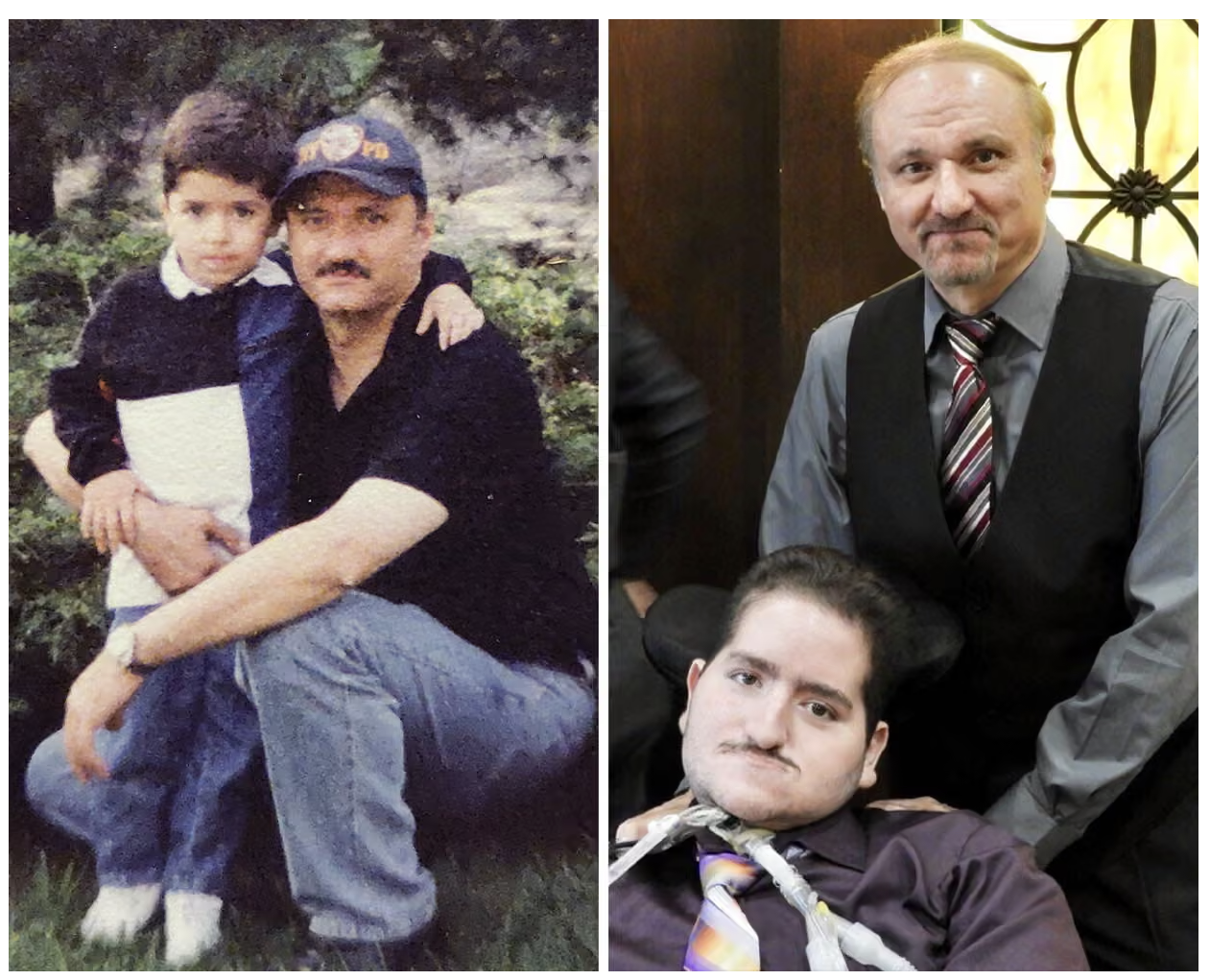
A 62-year-old father named Maher Tarabishi visited the ICE field office in Dallas, Texas, on 28 October as he has done each year for 17 years. Tarabishi, originally from Jordan, is in the US on a supervision order. Even though his asylum claim was denied, the US government allowed him to remain in the country because he is the primary caretaker for his son, Wael, who was diagnosed at four years old with a progressive muscle disorder called Pompe disease.
Maher Tarabishi remains in ICE detention at the Bluebonnet Detention Center in Anson, Texas. Meanwhile, his son Wael, a U.S. citizen, passed away last Friday, January 23rd at the age of 30. As Wael’s health worsened, the Tarabishi family petitioned for Maher’s release so he could resume caring for his son. When that request failed, they asked that Maher at least be allowed to say goodbye. However, authorities denied both requests. Now, the family is pleading for Maher’s release so he can attend Wael’s funeral, although they have little faith that ICE will grant this final request.
If you can, please consider donating to help support the Tarabishi family as they are facing unexpected and overwhelming financial expenses, including emergency medical costs, legal fees, lost income, and basic living needs.
What Deaf and Hard of Hearing People Need to Know About ICE
I came across an instagram reel full of helpful information, asking the question “What if ICE gives you a command, but you’re deaf?”
David: 50,000 of us just marched in Minneapolis to say that what ICE is doing here is not okay, but less than 24 hours later, they shot and killed Alex Pretti in our neighborhood.
Bri: We’re deaf and we’re concerned because ICE relies on verbal compliance, which many of us can’t hear or give.
The law says deaf people are entitled to effective communication when dealing with law enforcement, but based on what we’ve seen the last few weeks here in Minneapolis, ICE doesn’t always respect people’s rights (an understatement, tbh), and that has impacted deaf people, especially deaf people of color.
Screenshots of news articles appear on-screen with the headlines: “Deaf Mongolian immigrant held by ICE in California for 4 months with no access to interpreter,” “Deaf Utah man files federal civil rights lawsuit after encounter with ICE agents outside SLCC,” and “Deaf, mute and terrified: ICE arrests DACA recipient and ships him to Texas.”
David: And most recently, here in Minnesota, a Black deaf man—Ike Murinagi—was wrongfully sent to a detention facility in El Paso. It’s important to stay aware of what’s happening around us and to share information with each other. We’ve included several resources in the caption to help answer questions like the one above, but our list seems small. If you know of more resources in ASL, let us know, we’ll continue to update this post.
From the signsofgoodfood account on instagram
Useful Resources
- ASL Red Card for Immigration Encounters
- Video: How to talk to children about ICE via @deafcounseling
- Statement from the Minnesota Association of Deaf Citizens (MADC) with community resources
- MnNEAT (Minnesota Neurodivergent Education Advocacy and Therapy Services) rapid ice-related community resources
- Know Your Rights – effective communication in ICE interactions via @nad1880
- @deafmentalhealthhub has shared resources on managing collective trauma
- @photonovic posted a video on the SALUTE acronym and how to use it
- @jeannemariexo has a video up with links related to immigrant justice
- @handsunitedor has several resources for ICE communication for DHH.
- Know Your Rights card in multiple signed languages
- Know Your Rights presentation in ASL and LSEC (Ecuadorian sign language)
- @deafequalityorg has a doc & video on “What Deaf and Hard of Hearing People Need to Know About ICE”
- Street Medic 101 training in ASL will be held on Zoom on January 28th, 2026
Federal agents are heavily deploying chemical irritants. What are the health consequences?
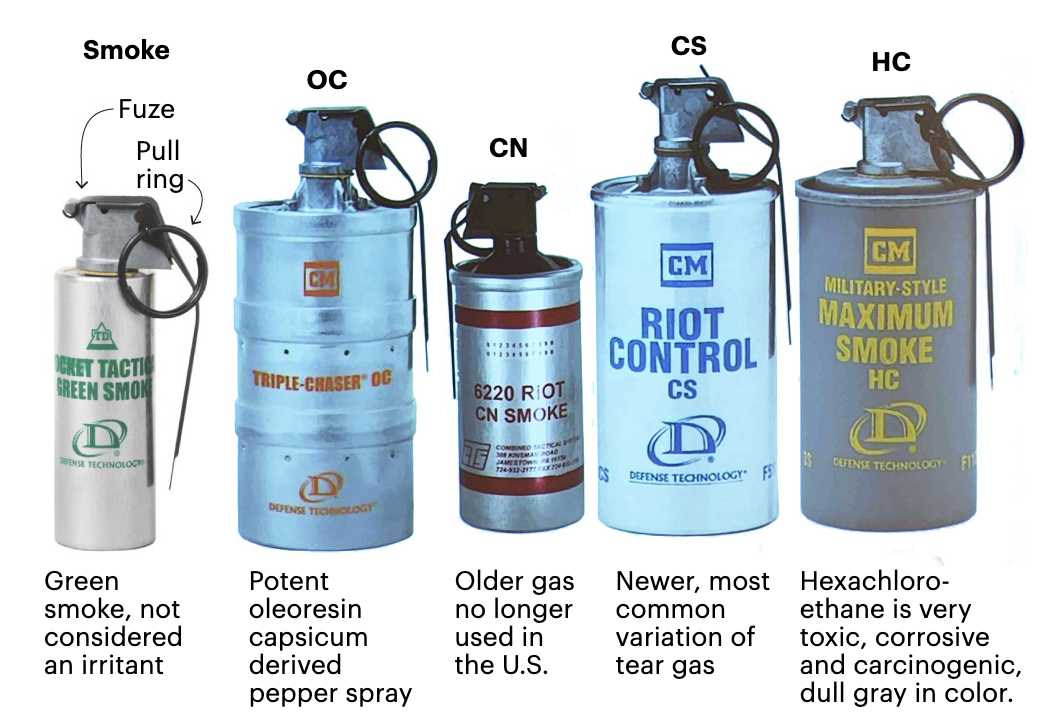
The morning of Jan. 24, after agents killed 37-year-old Alex Pretti in south Minneapolis, agents and State Patrol officers deployed thick clouds of several types of tear gas on the crowd surrounding the scene. Residents found empty canisters afterward listing ingredients including capsaicin, the active component that gives chili peppers their heat.
Gift link for the Star Tribune article: Munitions experts say ingredients can vary and can be considered proprietary
Crowd-control munitions
Tear gas and pepper spray are among a range of substances known as less-lethal crowd control agents. Chemical irritants can injure any part of the body, including eyes, skin, lungs, and mucus membranes.
If you or someone you know develops health concerns or questions after exposure to gases, there are two reporting resources you can use, in addition to consulting your healthcare provider. See the following:
- Minnesota Regional Poison Control, phone: 1-800-222-1222
- MN Department of Health’s risk assessment unit
- phone: 651-201-4899
- email: health.risk@state.mn.us
As you document potential exposure, focus on the key terms “adverse reactions” to “unknown chemical agents.” Authorities might request a blood sample for the Minnesota Department of Health lab to analyze. Currently, researchers have limited data on how these chemical agents affect health when deployed this way. So I want people to know how they can contribute to science and help characterize the physical health harms ICE is causing in our community, including documenting adverse reactions to unknown chemical agents.